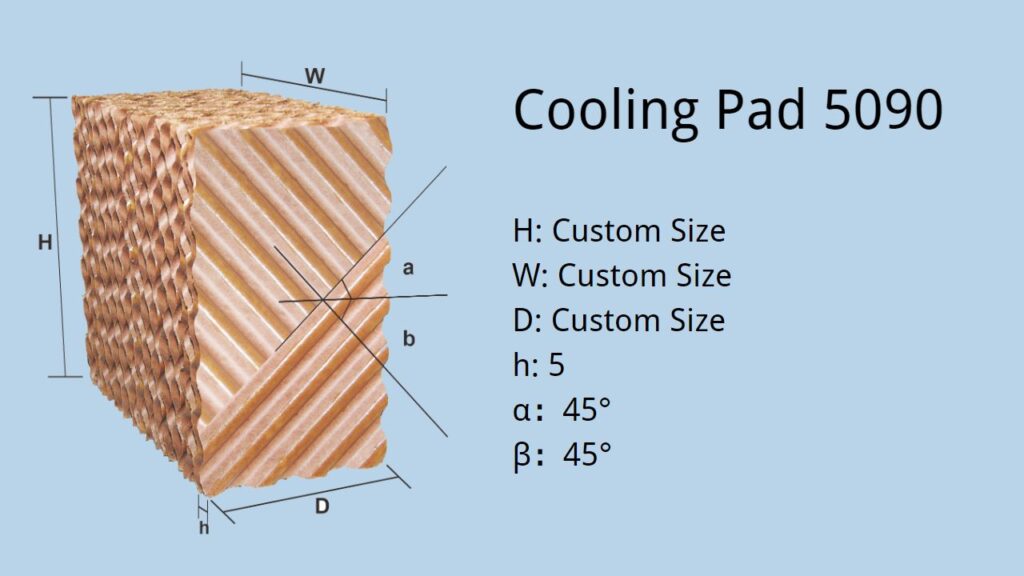
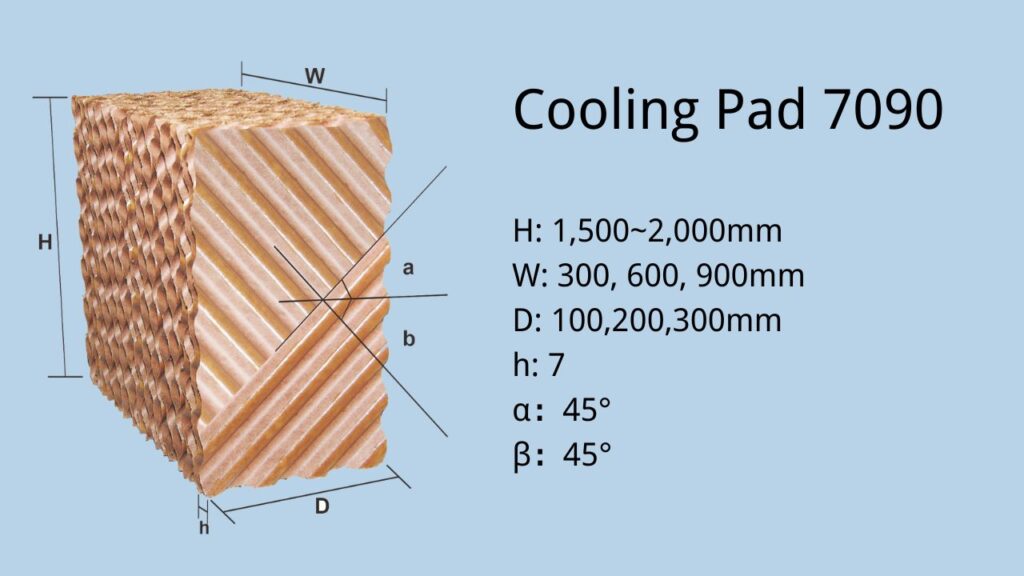
Wet the pads
Water is circulated from the tank to saturate the evaporative cooling pads.

 RTFANS product reference
Cooling Pads System / Product record
publishedRTFANS industrial exhaust fans for factories, workshops, greenhouses, poultry houses and livestock buildings, with model options from 15,000 to 38,000 m³/h.
Product overview
Product record
| MPN | KA-1380 GI / KA-1220 GI / KA-900 GI |
|---|---|
| SKU | KA1380GI1 / KA1220GI1 / KA900GI01 |
| Product Size (mm) | 1,380 × 1,380 × 400 / 1,220 × 1,220 × 400 / 900 × 900 × 400 |
| Airflow (m³/h) | 38,000 / 29,000 / 15,000 |
| Motor Power (kW) | 1.1 / 0.75 / 0.37 |
| Fan Speed (rpm) | 1,270 / 1,100 / 770 |
| Blade Diameter (mm) | 450 / 450 / 450 |
| Weight (kg) | 75 / 60 / 45 |
| Installation | Wall mounted / Wall mounted / Wall mounted |
| Application | Industrial & agricultural ventilation / Industrial & agricultural ventilation / Industrial & agricultural ventilation |
Product context
Industrial Exhaust Fan is designed for large factories, warehouses and high-heat industrial spaces. Its treated evaporative media supports stable water distribution and heat transfer.
Operating principle
Water is circulated from the tank to saturate the evaporative cooling pads.
The fan or blower pulls hot outdoor air through the wet pads.
Heat is absorbed through evaporation before filtered air reaches the occupied space.
Built for industrial use
Continuous outdoor air movement helps reduce heat in open or semi-open facilities.
Even wetting supports stable evaporation, filtration and cooling performance.
Corrosion-resistant housing and reinforced components support long service life.
Timer, temperature and optional humidity controls make daily operation easier.
Selection data
Before specifying
Cooling performance depends on entering air temperature, relative humidity and ventilation. The system performs best where cooled fresh air can move continuously through the space.
Service routine
Before seasonal shutdownTurn off the water supply, empty and clean the tank, and dry the cooling pads.
During extended storageDrain circulating water and check the tank, pads and housing for scale, algae or corrosion.
Facility planning
Review pad construction, water distribution, installation pairing and service requirements for this cooling media system.
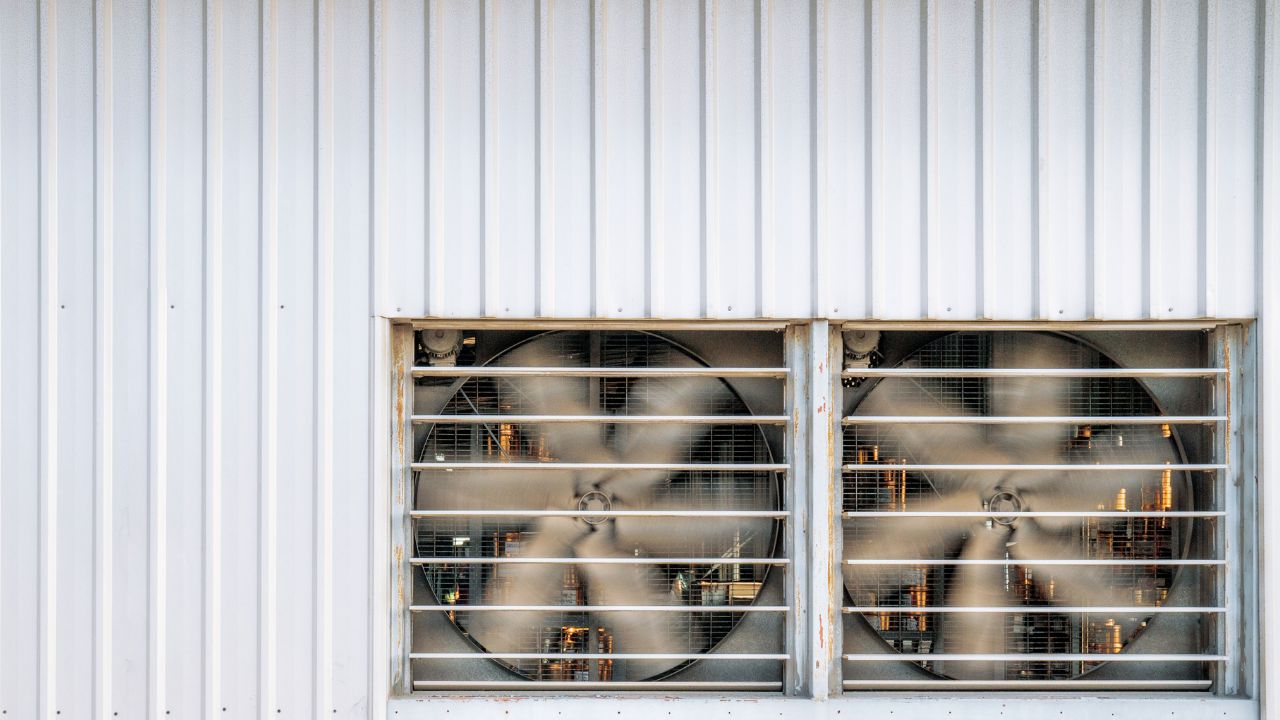
RTFANS industrial exhaust fans are designed for high-volume ventilation in factories, workshops, greenhouses, poultry houses, livestock buildings and other large spaces. Installed as part of a mechanical ventilation system, the fan exhausts hot, humid or stale indoor air and helps create negative pressure that draws fresh outdoor air into the building through designated air inlets. For applications requiring additional evaporative cooling, RTFANS industrial exhaust fans can also work together with evaporative cooling pads to form a complete fan-and-pad cooling system.
High-volume exhaust fans continuously remove indoor air and introduce replacement air through properly designed inlets. When exhaust capacity exceeds uncontrolled incoming airflow, the fans create negative pressure inside the building. Fresh air can then be drawn through designated openings, louvers or evaporative cooling pads. Large wall-mounted fans can be installed according to total ventilation requirements for large buildings.
Industrial exhaust fans can help remove accumulated hot and stale air from factories, workshops, warehouses, assembly areas and processing facilities. In greenhouse ventilation systems, exhaust fans draw warm indoor air out while fresh outside air enters from the opposite side of the structure. In poultry houses, multiple fans can be used for minimum, transitional or tunnel ventilation requirements. Negative pressure exhaust fans can also be incorporated into compatible livestock and agricultural buildings.
A negative pressure exhaust fan removes air from an enclosed building faster than replacement air enters through uncontrolled openings. This creates a pressure difference between the inside and outside of the building, so fresh outside air is drawn through designed air inlets. The final airflow pattern depends on fan location, inlet design, building envelope, obstructions and operating static pressure.
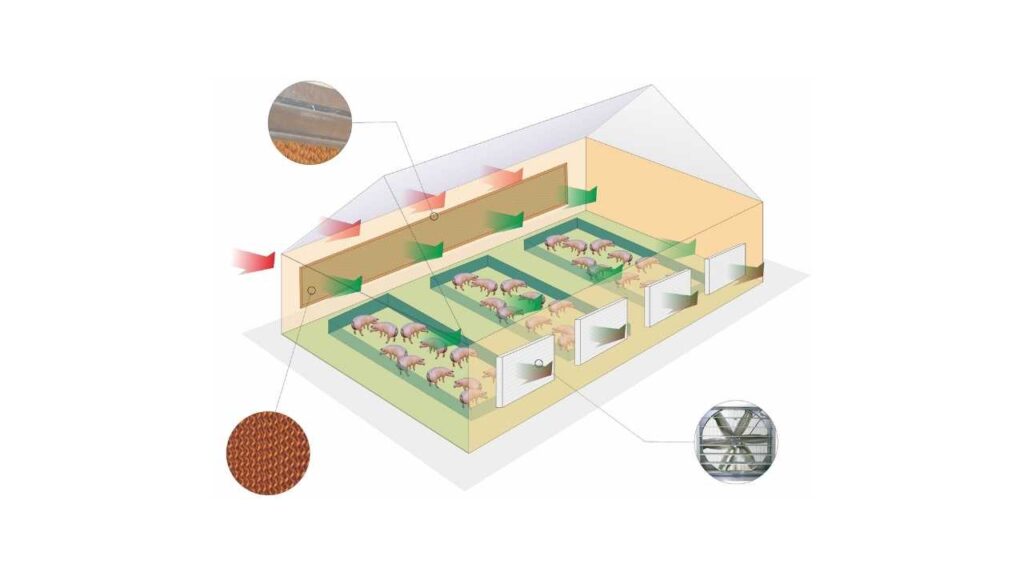
An industrial exhaust fan can be paired with wetted evaporative cooling pads to create a negative-pressure fan-and-pad system. Exhaust fans remove warm indoor air, negative pressure draws outdoor air through the wetted pads, and water evaporation absorbs heat from the incoming air before the cooled fresh air moves through the building. Actual cooling performance depends on outdoor temperature, relative humidity, airflow, pad depth, air velocity and system design.
Determine the application, required airflow, available static pressure, power supply and number of fans. Total ventilation requirements may depend on building dimensions, required air changes, internal heat load, production equipment, outdoor climate and the overall ventilation system design. Louvers, cooling pads and air inlets create resistance to airflow, so use the fan performance curve at the required operating static pressure where available.
RTFANS supplies industrial exhaust fans for industrial ventilation, agricultural ventilation and evaporative cooling projects. For fan selection, send us your application, building dimensions, required airflow or static pressure if known, fan quantity, voltage / phase / frequency, operating temperature, cooling pad system requirement and destination country. If you do not know the required airflow, start with your application, building dimensions and destination country.
An industrial exhaust fan removes indoor air from factories, workshops, warehouses, agricultural buildings and other large spaces. A negative pressure exhaust fan creates a pressure difference that draws replacement air through designated inlets. Common applications include factories, workshops, warehouses, greenhouses, poultry houses and livestock buildings. Select fan size based primarily on required airflow and operating static pressure rather than external dimensions alone. The number of fans depends on total required airflow and each fan's performance at the operating condition. For a quotation, provide the required fan size or airflow, quantity, voltage, phase, frequency, application, destination country and, for complete projects, building dimensions and cooling pad requirements.
Related industrial equipment
Facility planning
Engineering selection support
Share floor area, clear height, roof structure, and operating conditions for a project-specific recommendation.